
郑板桥650位杭州人参加了一场“体质大考”,结果出人意料_我的网站
A | 常干力气活,身体差不了? 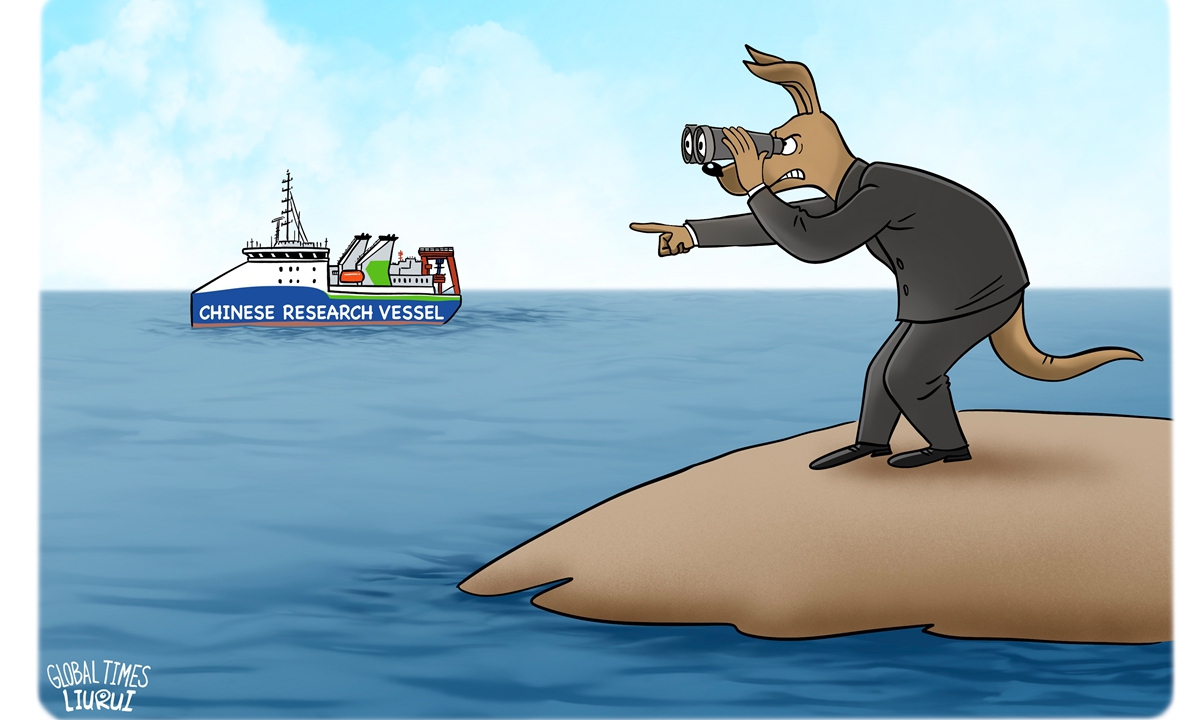 Published by the National Security College at the Australian National University (ANU), the paper claimed recent damage to cables in the Baltic Sea and around China's Taiwan region suggests "state actors are now actively probing and testing cable infrastructure in peacetime as part of broader hybrid warfare strategies" to rapidly degrade connectivity at the outset of a conflict, The Australian reported. The paper claimed 16 privately owned subsea cables that carry 99 percent of Australia's internet traffic are a "high priority target" for Australia's adversaries that could be severed in a conflict, threatening the nation's economy and social fabric, according to The Australian. The report singled out China and Russia for blame, saying that there have been multiple apparent attacks on submarine cables in recent years in European waters as well as near China's Taiwan region, suspected to be linked to Russia and China, the Straits Times reported. However, the report cites a 2025 voyage by Chinese research vessel Tan Suo Yi Hao along Australia's western and southern coastlines as evidence to back its claim that "potential adversaries are actively gathering information about Australia's cable infrastructure." This report, relying on the routine scientific operations of a Chinese research vessel in 2025 to level allegations of offensive actions against China, and employing ambiguous terminology such as "suspected" and "potential," demonstrates Australia's evidentiary leap, Chen Hong, director of the Australian Studies Center of East China Normal University, told the Global Times on Monday. This erroneous claim was refuted by the Chinese Foreign Ministry at the time. Chinese Foreign Ministry spokesperson Guo Jiakun said on March 31, 2025 that China carries out normal activities at sea in accordance with international law, including UNCLOS. "We hope Australia will have a right understanding of this and stop the groundless suspicion and speculations," Guo added. This is not the first time certain Australian politicians has leveled baseless accusations of China intending to sabotage its undersea cables. Back in May, Defense Minister Richard Marles claimed during the Shangri-La Dialogue that China ought to boost transparency around its maritime operations. He also asserted that a surge in damage to subsea cables had transformed the seabed into a "battlefield," per The Australian. Chen said Australian side's scaremongering is tied to its predictive threat‑perception framework forged in recent years. This framework designates China and other countries as strategic competitors in advance, subsequently forces routine scientific activities into a confrontational framework, Chen said. Apart from unfounded allegations against China, the paper claims Australia's defense military "must incorporate the defense of submarine cable infrastructure into its operational planning," according to The Australian. It added the government should also consider up¬grading an auxiliary ship operated by the navy, ADV Guidance, to enable it to repair damaged cables. The vast majority of submarine cable damages are caused by accidental factors such as fishing operations and vessel anchoring, rather than deliberate sabotage. For suspected cases of intentional damage, independent technical investigation bodies should be established, and the principle of "investigate first, characterize later" should be strictly applied, so as to prevent ordinary maritime accidents from escalating into diplomatic conflicts, Chen said. The core problem of Australian side's submarine cable security lies entirely with itself. Instead of addressing its own infrastructure shortcomings and improving its domestic protection and maintenance systems, the Australian side has chosen to continually exaggerate external threats and stoke bloc confrontation, the expert added. Chen said that by fabricating alleged Chinese threats, Australian side seeks to "rationalize" its military spending increases and underwater force expansion. The submarine digital infrastructure originally meant to serve global development has been labeled along us versus them lines, and this constitutes the biggest hidden danger, he added. 。他是安徽人,2009年来到杭州,在浦沿街道负责社区秩序管理。
B | 他一直认为,“我常常干力气活,身体应该差不了。”但2021年第一次被社区叫来参加体质监测时,他就被“闭眼单脚站立”的动作难住了。“金鸡独立,闭眼站不住了。”他挠挠头,“年轻的时候,站1分钟没问题的。”这几年,牛涛对自己的身体有了更清晰的认识:“肺活量变好了,但平衡性没以前好。
C | 平时没时间锻炼,全靠工作活动筋骨。”退休老人的肌肉量让年轻人自愧不如“80千克力。
D | ”握力测试区,63岁的乌建荣一出手,旁边排队的人都侧过头来看。这位退休的行政人员,肌肉量让不少年轻人都自愧不如。乌建荣退休前在温州工作,2023年女儿把他接来杭州。他从小就喜欢运动,退休后时间充裕,生活安排得满满当当:早晨8点到9点半打太极,周一唱歌,周五朗诵,平时还参加社区的乒乓球、羽毛球活动。“朗诵不算运动啦?”面对邻居的调侃,他认真反驳,“唱歌朗诵实际上都是运动,你的气息带动整个身体运动。”不过,从运动科学角度看,朗诵属于呼吸训练,确实不是传统意义上的体育运动。社区组织体测活动,乌建荣每次都积极报名参加。“大家一般不聊成绩,但会留意一下别人的体测结果。”他笑着说,测试数据就像一面镜子,能照出平时锻炼的不足,“比如握力,人家都四五十,你才十几,那肯定肌肉不行,缺乏锻炼。”他的80千克力握力,是靠常年规律运动练出来的:太极练平衡,朗诵练气息,乒乓球练反应。他的柔韧度,也得益于每天雷打不动的太极拉筋。十项指标反映平时锻炼的效果有哪些人来测?这场监测覆盖20~39岁、40~59岁、60~69岁三个年龄段,并按体力与非体力人群细分抽样。都有哪些项目?十项指标按照功能分区有序进行:身高、体重、肺活量、台阶指数、坐位体前屈、握力、纵跳、闭眼单脚站立、俯卧撑(男)/仰卧起坐(女)、选择反应时。台阶指数测试区,参与者要在固定节奏下完成3分钟上下台阶,随后测量心率恢复情况。许多居民说,今年心率恢复比去年更快,心肺耐力的提升用数据“说了算”。
E | 力量测试环节,30岁的徐先生肺活量达到5192毫升,俯卧撑一口气做了100个。“坚持锻炼还是有效果,这一年一周三次羽毛球,不打球就跳绳,交叉练习。闭眼单脚站立区,有人站得稳稳当当,有人则摇摇晃晃十几秒就“投降”。握力计前,有人捏出80千克力,有人只有十几千克力,数据比镜子还诚实,反映出每个人平时锻炼的实际效果。柔韧性测试区,56岁的孔灿凤轻松推过脚尖。“这几年,我每天坚持练太极、架腿拉伸。”她说,“坚持了一年,筋松多了,腰也不酸了。闭眼单脚站立,我能稳稳超过60秒。”不是为测而测“以前觉得自己身体还行,一测才知道柔韧性这么差。”“今年肺活量涨了1000多毫升,这一年球没白打。
F | ”居民们的感慨,道出了体质监测的意义:不是为测而测,而是测完之后要告诉每个人,你可以练什么、怎么练。体测现场,许多参与者测试完就迫不及待地在社交平台分享体验,带动更多邻里关注自己的体质数据。一场监测,正在点燃一个街道的健康热情。“早些年,组织起来得挨个催,如今,居民的报名意愿越来越强。”浦沿街道文体中心副主任曾丽华说,“去年,体测的合格率在90%以上,但大家的柔韧度普遍较差。去年开始,街道就针对性开设了中老年柔韧训练班、青年力量提升班等课程。”曾丽华介绍,接下来,浦沿街道将运用今年这份“体质报告”,在去年开设的中老年柔韧训练班、青年力量提升班基础上,继续优化课程内容与教学安排,完善面向不同人群的健身指导服务。 Current article:http://38u42.minshixuanhabing.bond/list_hm2qsq/ryj.html Published on:16:22:24 |

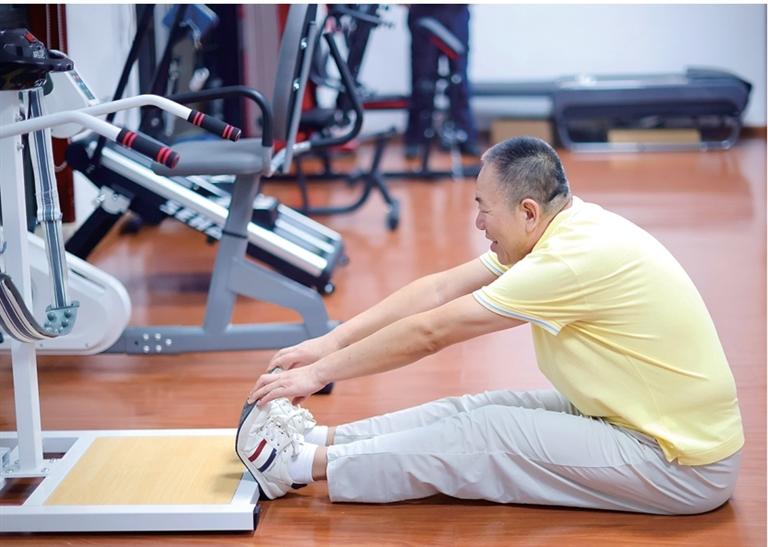 乌建荣在做体测
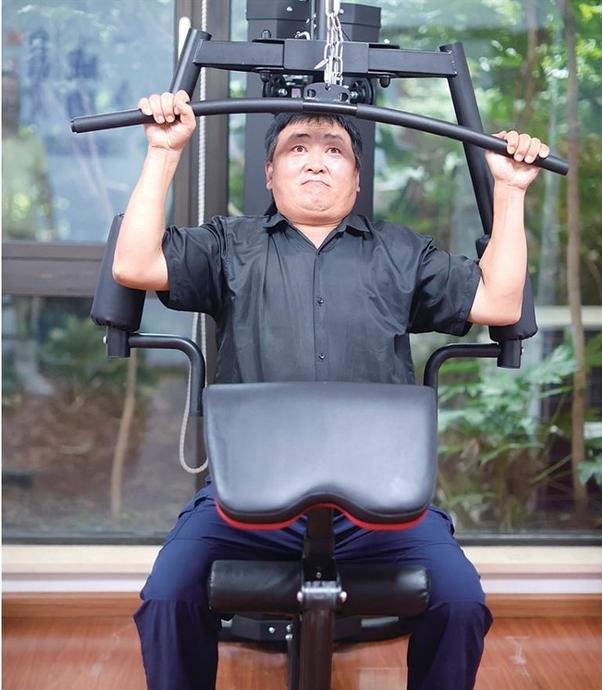 牛涛在做体测 记者 江玥 摄近日,滨江区浦沿街道新生社区的监测点,身高体重仪、台阶测试器、握力计一字排开,29个社区的650位居民排队“考试”。“金鸡独立”站不住了55岁的牛涛站在闭眼单脚站立测试区,晃得厉害。


